
St. John Directory Collections
No official inventory lists a continuous St. John city directory series. The sound approach is to inspect each Lake County or nearby-city volume for its geographic scope. The Indiana State Library holdings list supplies the dates and publishers below, while the Lake County Public Library genealogy staff can help identify shelf copies, microfilm, and restricted-reference items. County-wide Polk editions are the best modern candidates, but even those require an issue-by-issue check for Saint John entries.
| Collection | Years | Where Held | Access |
|---|---|---|---|
| Polk, Lake County-wide | 2012, 2015, 2020 | Indiana State Library listing | Confirm town coverage in each issue |
| Haines Criss Cross, Northwest Indiana | 1982 to present | Crown Point local resources | In-person reverse-address research |
| Robinson's, Crown Point | Scattered 1941 to 1996 | State and local library holdings | Nearby-city context; inspect scope |
| Indiana Room Online | Varies by item | Internet Archive through LCPL | Free digitized books and pamphlets |
Nearby Hammond, Gary, Hobart, Griffith, and Crown Point runs can help follow a family that moved within Lake County. They cannot prove that a St. John household was covered. Missing years are normal, and the 1890 federal census loss makes directories, newspapers, land indexes, and cemetery sources more important around that decade.
St. John Directory Research Rooms
The Lake County Public Library genealogy collection is the main local access point. Its Merrillville Genealogy Room and Indiana Room hold city directories, local books, microfilm, newspapers, school enumeration indexes, yearbooks, clippings, and restricted reference material. The St. John branch at 9450 Wicker Avenue offers computers, Wi-Fi, and scanning, but specialist genealogy holdings are centered in Merrillville.
Ask staff for a Lake County and St. John shelf list. FamilySearch affiliate access at the library may show records unavailable through a home account. If the right directory is not digitized, request staff help with the physical volume or microfilm rather than assuming a web search is complete.
Note: Exact title-by-title St. John coverage is not published online, so confirm the edition and geographic scope before citing an entry.
Digital St. John Directory Shelves
Several statewide tools fill gaps between printed city directories. Indiana Memory brings together digitized photographs, documents, and local collections. Hoosier State Chronicles searches historic newspapers, while Indiana Legacy indexes historical vital, obituary, court, newspaper, and yearbook material.
Browse Indiana Memory before using its statewide collection interface.
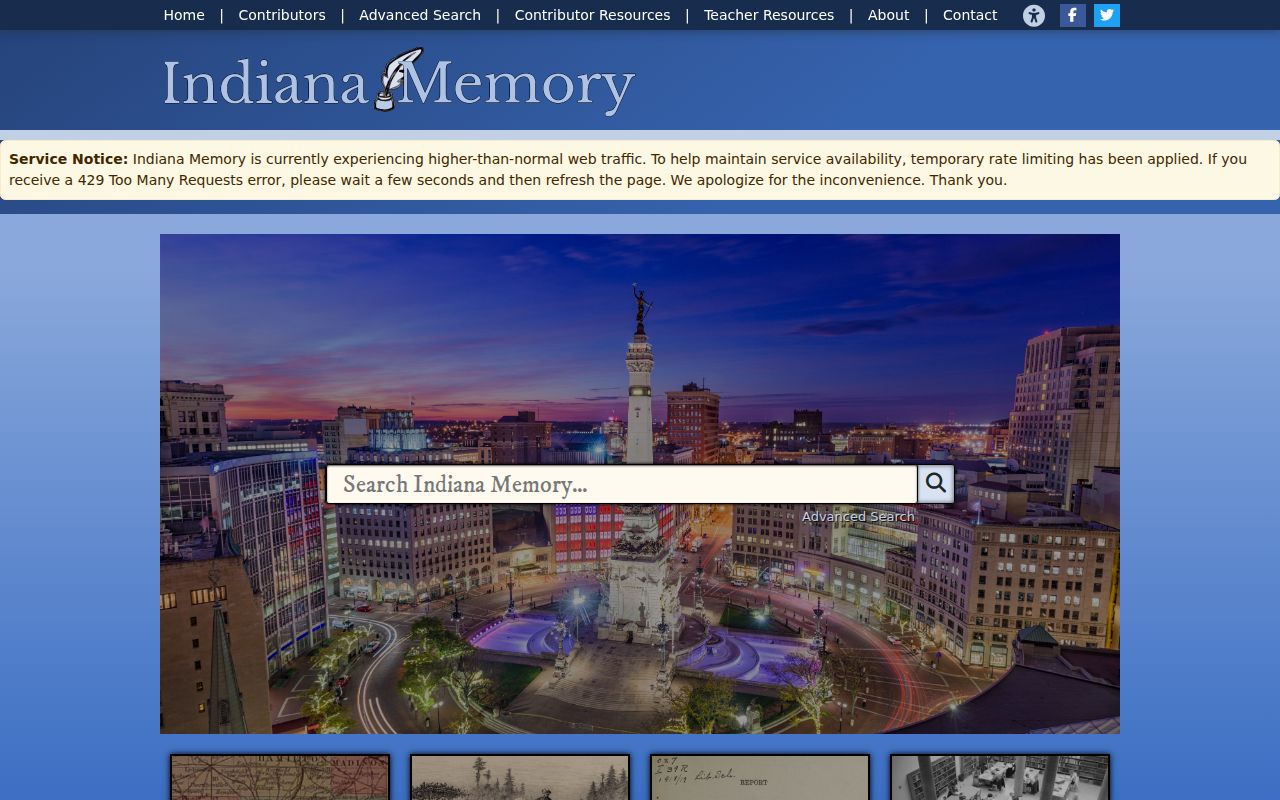
The collection screen helps identify a contributing library or archive, which is the next place to request a clearer image or fuller citation.
Search Hoosier State Chronicles when a directory year needs support from a dated newspaper notice.
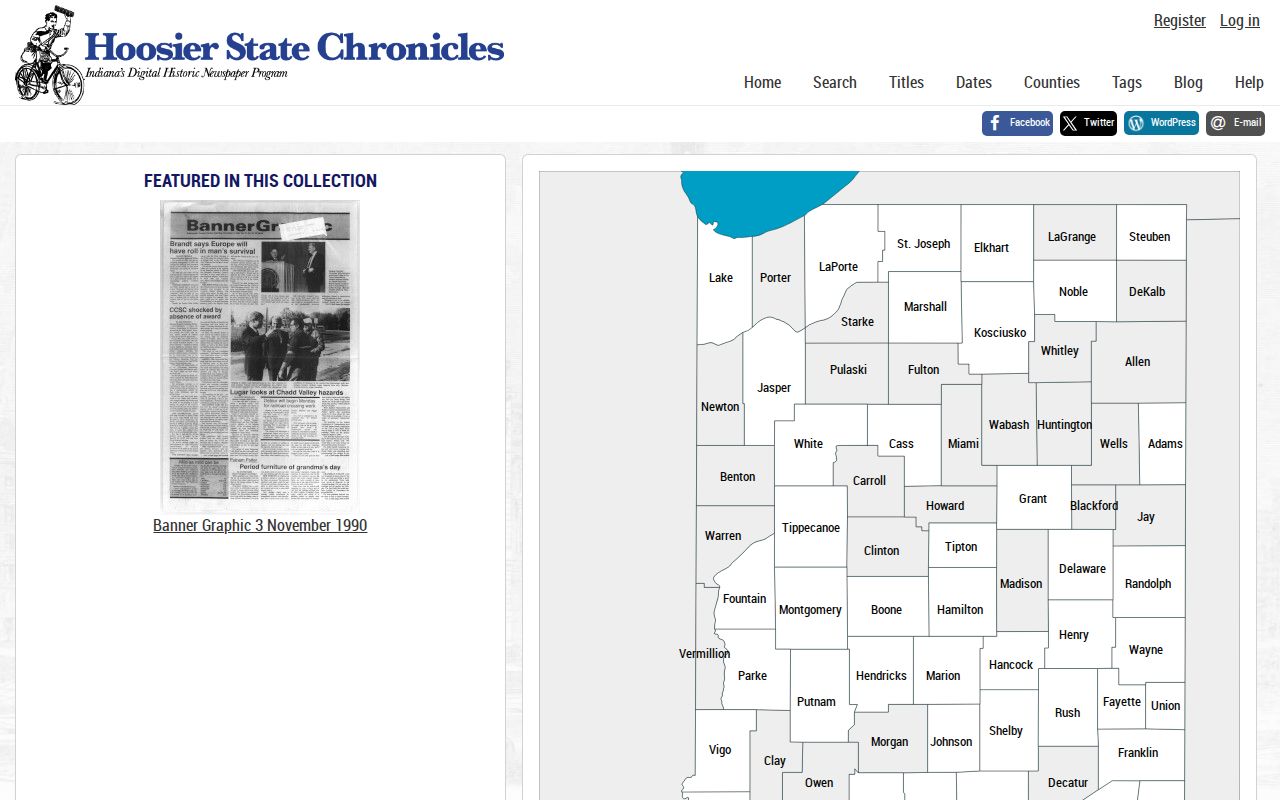
Newspaper results can connect initials, relatives, and address changes, but the article date must stay attached to the finding.
The State Library Lake County guide points to naturalizations, early land sales, WPA birth, death, and marriage indexes, military records, cemeteries, and original landowners. Search a surname with both “St. John” and “Saint John,” then test initials and maiden names. These sources support a directory find; they do not replace the edition, page, and publisher citation.
Open the State Library Lake County holdings guide to see how books and county histories are organized.
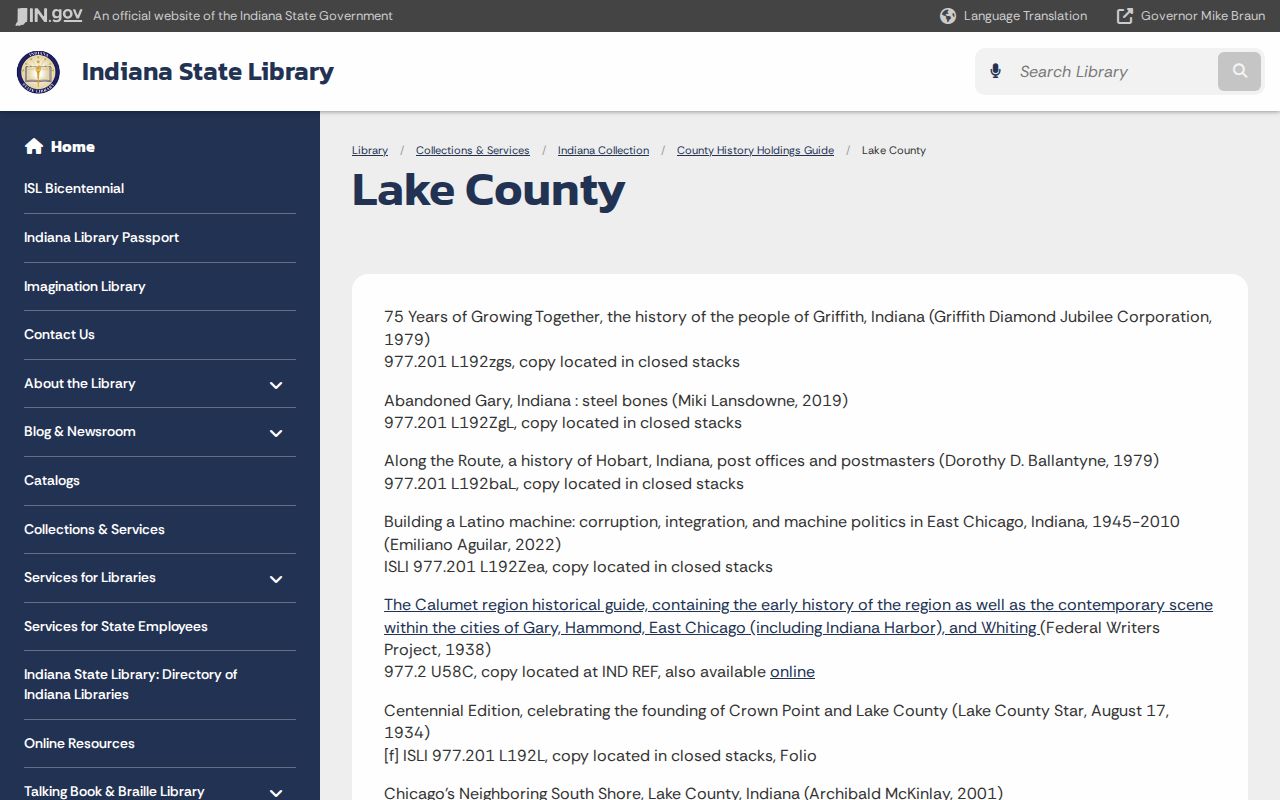
The holdings guide supplies the title-level trail needed before contacting a reading room or requesting a volume.
The Lake County History Center database describes more than 31,000 genealogy files, photographs, and engineering drawings. Research requests go through its collections manager, and fees may apply.
For material that is not online, send a focused request. Give the full name, spelling variants, an estimated year, the St. John or Saint John place form, and the type of item sought. A narrow request helps a librarian distinguish a directory entry from an obituary, school index, photograph, or family file. Ask whether the answer is an index citation or an image of the original item.
Open the History Center collection search before reviewing the captured interface.
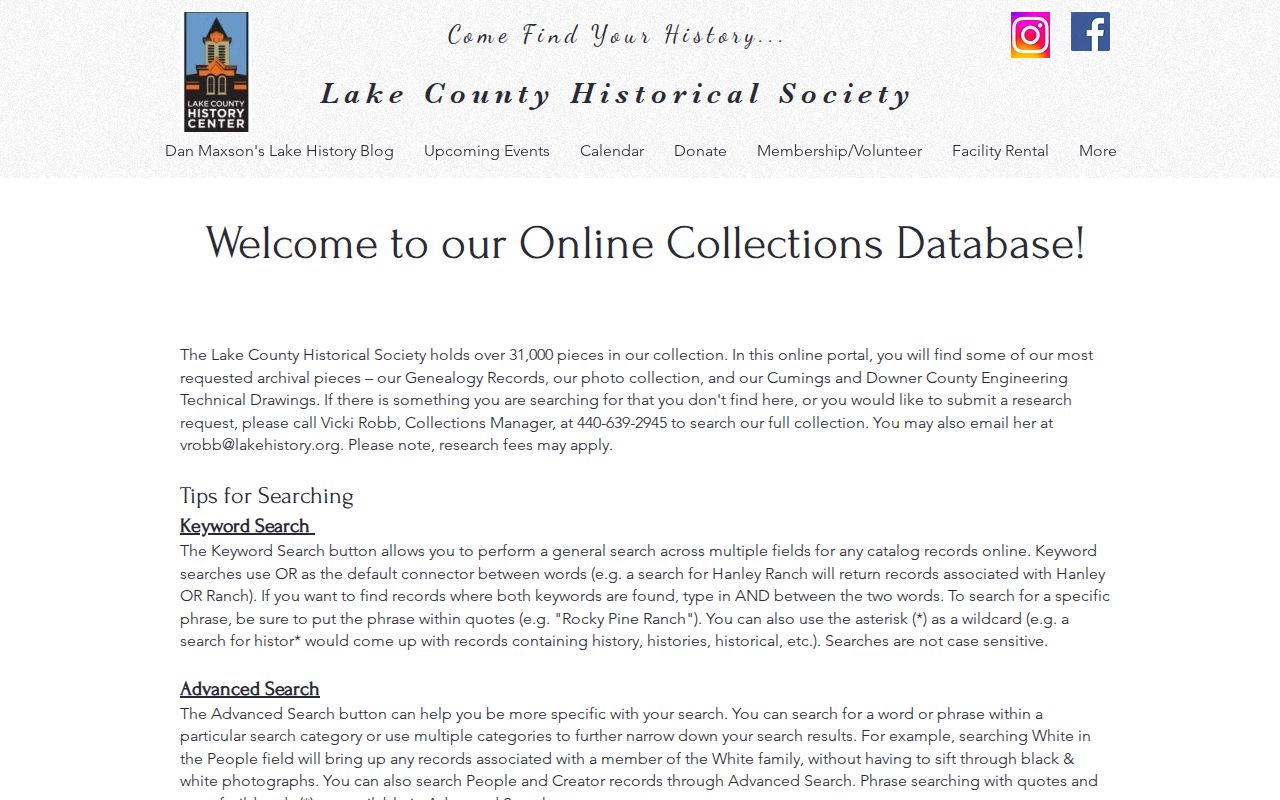
The collection search can reveal a file or image lead that should then be checked against a dated directory or original record.
Read St. John Directory Entries
Record the entry exactly as printed before interpreting it. No legible scanned St. John example was confirmed during research, so publisher symbols must be checked against the abbreviation key in that same volume. A line may identify a household, business, public institution, or cross-reference. It may also use initials or place a spouse in parentheses.
| Name | Surname, given name, initials, spelling variants, and any spouse notation |
|---|---|
| Work line | Occupation, employer, or business designation when the publisher includes it |
| Address | House number, street, unit, and printed city or postal label |
| Status marks | Owner, renter, widow or widower, and telephone marks only when defined in that edition |
| Citation | Year, publisher, edition, page, and location of the abbreviation key |
- Criss-cross directory
- A reverse directory arranged by street and house number instead of by surname.
- Householder index
- A list centered on the person identified as the household head, which may omit other residents.
- Abbreviation key
- The publisher's legend for symbols and shortened words. Save it with the entry because meanings vary by edition.
St. John Directory Obituary Bridge
The LCPL obituary index is a strong human-use companion when a person disappears from a city directory. It covers the Post-Tribune/Gary Post Tribune from 1921 to current and the Lake County Register and Star from 1857 through 1938. Search fields include a full or partial name, maiden name, date, city, and age. A library copy request can supply the item behind the index.
An obituary may connect relatives, a funeral home, a newspaper date, and a city association. It is not proof of residence. Wording such as “of St. John” should be compared with a directory address, deed, census line, or other source tied to a date.
Maiden-name and partial-name fields are useful when an old city directory uses initials or lists a household under one spouse. Search the city field cautiously. Newspaper place labels may reflect a broad community association rather than the precise town limits. The clipping itself often contains the relationship or service detail that explains why the index matched.
St. John Directory History Since 1837
Lake County was created in 1836, and St. John’s official historical references use 1837 as the town’s founding year. The State Library holdings guide lists St. John, Indiana 1837–1980 by Tuley and St. John, Indiana 1837–2001: history of St. John, issued by the St. John Historical Society. These books can supply former place names, churches, schools, institutions, and citations that make directory searches more exact.
The record trail spans early Lake County land sales from 1837 to 1857, first marriages from 1837 to 1850, naturalizations from 1854 to 1932, and later WPA indexes. No official source found a Lake County courthouse fire. A missing online hit is more likely an offline or unindexed record than proof that the source was destroyed.
Digitization arrived in layers. The Recorder has a book-scanning project and began electronic recording in March 2021. Current GIS layers carry 2026 edits, while older directory runs remain scattered among books and microfilm. Put a coverage date beside each finding. A current map and an old city directory may both be accurate for their own dates while describing different people and street forms.
| 1837 to 1857 | Early county land sale and purchase sources |
|---|---|
| 1850 to 1920 | WPA marriage index coverage |
| 1882 to 1941 | WPA birth index coverage |
| 1982 to present | Haines Criss Cross run noted by Crown Point resources |
| 2012, 2015, 2020 | County-wide Polk editions listed by the State Library |
Trace St. John Family History
A St. John city directory search works best as a sequence, not a single lookup. Preserve every spelling, address form, publisher, and year. Then compare the listing with census years, newspaper notices, deeds, obituaries, and cemetery sources. Nearby postal labels matter because a household may appear under another Lake County place even when its later history is tied to St. John.
- Search the exact address in a Haines criss-cross volume, then search the surname in a regular directory.
- Compare several available years. Note moves, spouse changes, initials, and the first or last appearance.
- Pair the directory dates with the 1910, 1920, or 1930 census and later released schedules.
- Check newspapers, deeds, and the LCPL obituary index for the years surrounding a change.
- Save the edition, page, image, and abbreviation key so another researcher can repeat the work.
A missing name can mean a move, death, changed spelling, different household head, skipped publication, or noncoverage. It does not settle the question by itself. For current address-keyed research, use the St. John street directory workflow rather than stretching a historical book beyond its date.