
Finding St. John Residents
Begin with the kind of fact already available. A street address belongs first in the Lake County Assessor property search, where a parcel record may identify the deeded owner, mailing address, physical address, legal description, neighborhood, and recent transfers. A person’s name can go into Indiana MyCase, the Recorder index, or a historical index. An old address calls for the library’s city directories, obituary files, newspapers, and census material. These sources form a practical residents directory, though none is a complete list of everyone in town.
Ownership and residence are not the same. A parcel may be held by a trust, company, estate, or owner who receives mail elsewhere. Renters and other household members may never appear on the tax roll. Court filings show a party’s role in one matter, not a current home. Treat every match as one piece of evidence and compare names, dates, middle initials, parcel numbers, and addresses before deciding that two entries concern the same person.
- Check the county property roll by owner name, street address, or parcel number.
- Use Indiana Voters only to verify your own registration and polling information.
- Follow a property owner into the Recorder’s deed, mortgage, lien, plat, and release index.
- Search Lake County Public Library and state historical indexes for earlier residents.
- Ask the actual custodian for an existing record that is not posted online.
St. John Resident Record Keepers
St. John is a town in Lake County, while Crown Point is the county seat. That split explains why the most useful resident records are kept outside Town Hall. The Recorder holds land instruments. The Assessor maintains the ownership and assessment roll. The Clerk keeps Lake Circuit and Superior Court files, probate matters, marriage-license functions, and certified court copies. Elections staff administer voter records under state restrictions. For the full address-by-address method, use the St. John street directory.
Lake County Recorder
2293 N. Main Street, Building A
Crown Point, IN 46307
219-755-3730
Lake County Assessor
2293 N. Main Street, Building A
Crown Point, IN 46307
219-755-3100
Lake County Board of Elections
2293 N. Main Street
Crown Point, IN 46307
219-755-3795
Cross-Check a St. John Address
The assessor’s public search accepts an owner, an address, or a property number. Its advanced screen can narrow results with sale, assessment, building, neighborhood, district, and physical-property fields. The key distinction is between a situs address, the place where the parcel physically sits, and a mailing address, where the tax notice goes. Those addresses may differ. The named owner may also differ from the occupants.
| Search field | Best use | Important limit |
|---|---|---|
| Owner | Find parcels tied to a deeded name | May show a trust or business |
| Address | Locate one St. John property | Use the physical street address |
| Property number | Match assessor, GIS, and tax records | Not a person identifier |
| ZIP | Filter a broad result set | Postal limits do not equal town limits |
The Lake County GIS Hub adds parcel shapes and nearby parcels. Follow the parcel number into recorded deeds for stronger evidence of title. The assessor roll is a fast lead, not a title opinion and not proof that an owner occupies the home.
Open the official Lake County property search before reviewing its Owner, Address, or Property Number choices.
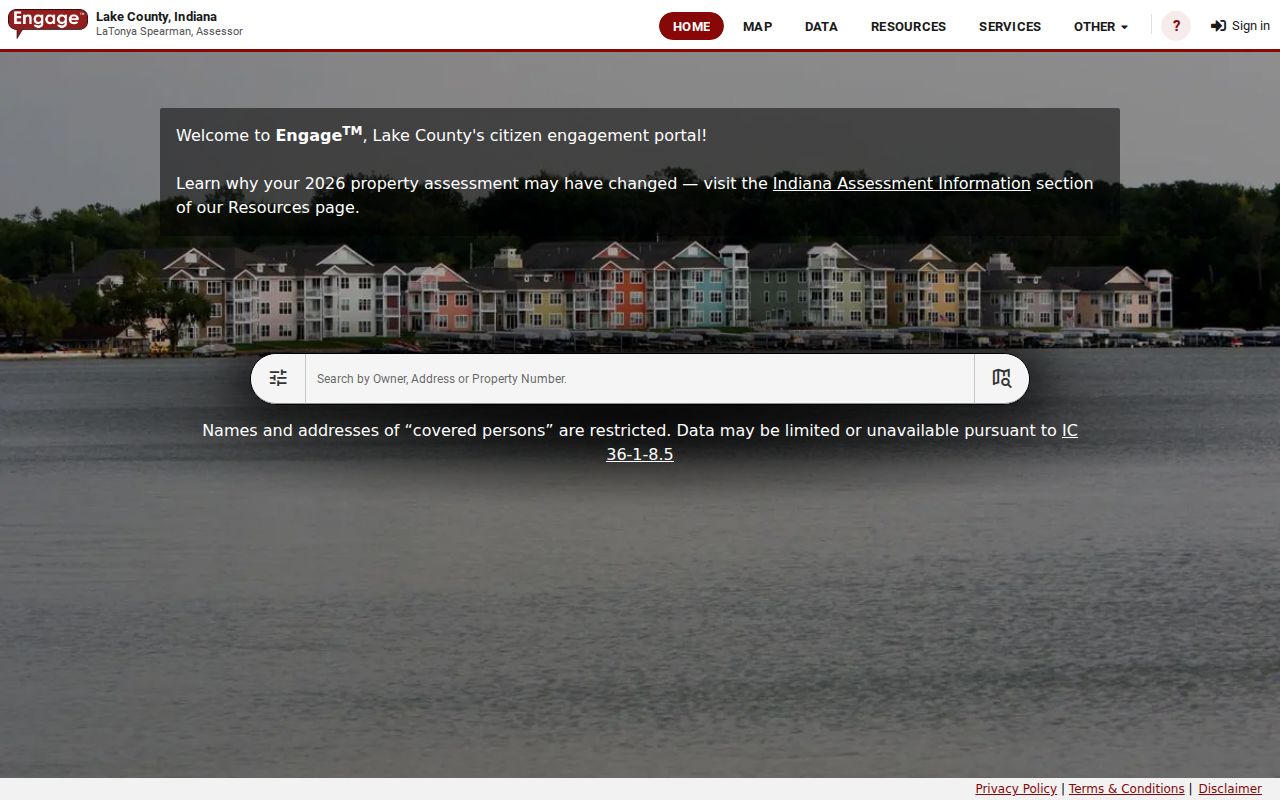
The search screen makes the three starting routes visible, which helps keep a name search separate from an address or parcel search.
Current St. John Directory Sources
Modern government systems are narrower than a printed household directory. Each lists people only because they own property, registered to vote, recorded an instrument, filed a public court matter, hold a public license, or serve in town government. Combining two independent sources is more reliable than trusting one name match.
| Source | Who It Lists | Keeper | Access |
|---|---|---|---|
| Property assessment roll | Deeded owners | Lake County Assessor | Free web search |
| Indiana Voters | Individual registration confirmation | State and county elections | Personal lookup; bulk use restricted |
| Recorded documents | Grantors, grantees, and instrument parties | Lake County Recorder | Login-gated index; copies cost extra |
| MyCase | Parties and attorneys in public cases | Indiana courts | Free public entries; sealed items omitted |
| Boards and commissions | Named public officers | Town of St. John | Free official pages and minutes |
A current owner question belongs with the Assessor and Recorder. A public case question belongs in MyCase and then with the Clerk for the official file. The St. John resident lookup gives the one-name workflow and explains how to reject false matches.
Follow St. John Parcel Deeds
The Recorder records deeds, mortgages, liens, releases, leases, subdivision plats, assumed business names, and many other instruments. Search by grantor, the person or entity giving an interest, and grantee, the party receiving it. The public landing page leads to Search and Advanced Search but requires an account before the detailed index opens. The office says its recordings span more than 200 years, although the exact online cutoff is not stated.
Use the parcel number, legal description, subdivision, book and page, and recording date to distinguish similar names. A plat is the recorded map of lots and streets in a subdivision. When the online record is incomplete, visit or call the Recorder during weekday office hours. Online document purchases are listed at $1 per page plus a $3 order fee.
View the Lake County Recorder portal and its route into the land-record index.
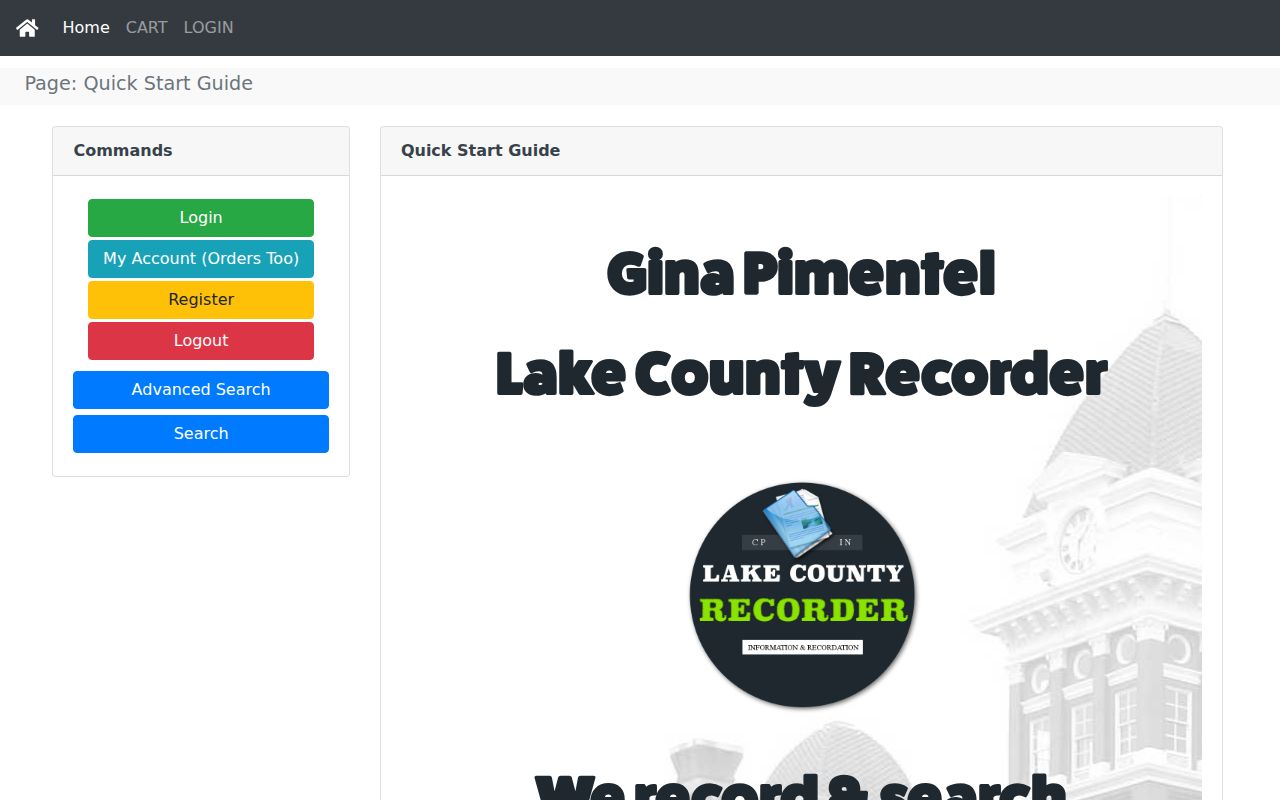
The Recorder portal is the bridge from a tax-roll owner to the recorded instrument that supports a transfer or lien.
Search St. John Court Names
Indiana MyCase searches public Lake Circuit and Superior Court entries through its Name tab. It offers first, middle, and last name fields, sounds-like options, court choice, open or closed status, and filing-date limits. Results may show the case number, court, parties, attorneys, filing date, status, charges or claims, and a register of actions. Narrow common names by court and date rather than treating the first result as the right person.
Some case records and documents are confidential, sealed, expunged, or unavailable online. The Lake County Clerk is the custodian for the official file and certified copies. Federal matters are separate and use PACER. A docket is the chronological list of filings and court events; it is not the same as every document in the file.
Review the official MyCase search before entering a St. John name.
The screen’s filters help separate people who share a name and show when a Clerk request is still needed.
Request St. John Town Records
The Town Clerk-Treasurer keeps official municipal records at 10955 W. 93rd Avenue. Town files can connect names with permit applications, board matters, legal notices, licenses, or an address, but St. John does not publish a household roster. The town records-request page requires the Access to Public Records Request Form. An oral request may be put in writing, and the town need not create a new list or analysis.
Describe an existing record with reasonable detail. Under the Indiana Access to Public Records Act, IC 5-14-3-1 et seq., an in-person or oral request generally receives a response within 24 hours and a written request within seven calendar days. A response may acknowledge the request while allowing reasonable production time. For help with access disputes, the Indiana Public Access Counselor publishes guidance and accepts complaints.
Use records law precisely. Ask for an existing permit, notice, ledger, or meeting record, not a custom list of St. John residents.
The Public Access Counselor explains APRA rights and response rules.
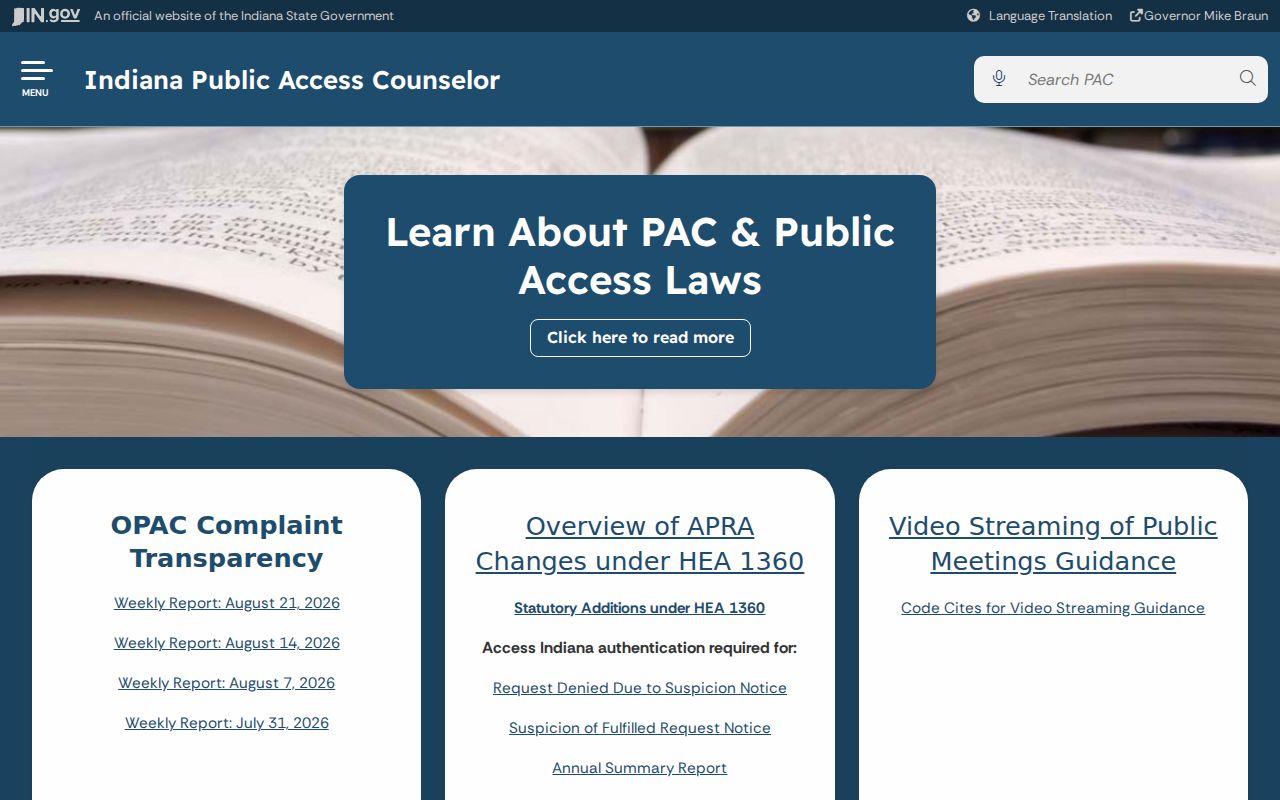
This state guidance helps identify the custodian and frame a clear request when a local file is not searchable.
St. John Voter Record Limits
Indiana separates individual voter services from requests for voter data. The Indiana Voters portal can confirm registration and polling information for the person using it. It should not be described as an open directory of names and home addresses. Lake County also publishes precinct, ward, school, town, and district maps, which are useful for checking how a St. John address fits election geography.
Computerized voter data uses form VRG-24 through the county voter-registration office. The form records the requester, chosen county or data, payment, intended use, and qualifying buyer category. State rules restrict solicitation and resale or transfer. Address Confidentiality Program participants receive stronger protection. Historical or list-maintenance questions should go to elections staff rather than being inferred from a failed online match.
See the official Indiana voter service screen used for personal registration checks.
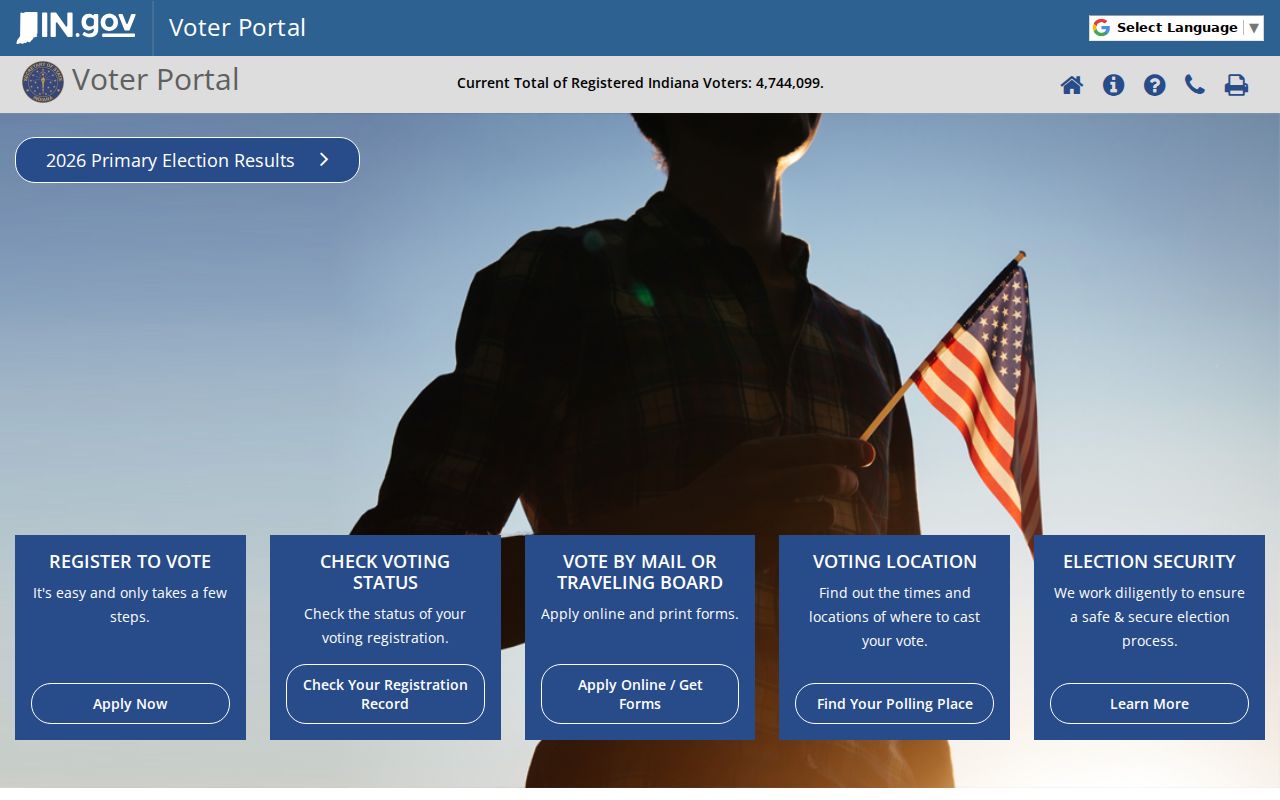
The state portal’s purpose is voter service and election information, not a downloadable St. John household directory.
St. John Vital Record Routes
Birth and death certificates are not open resident rolls. The Indiana Department of Health Vital Records issues certified Indiana birth, death, and fetal-death records under direct-interest, identification, and qualified-applicant rules. State birth records begin in October 1907 and death records in 1900. A Lake County health office may handle walk-in requests for events in the county, while marriage-license copies and divorce files route through the Lake County Clerk.
Genealogy access follows a different path. Older birth information generally involves a 75-year threshold and proof that the person is deceased or another authorized basis. Adoption records are sealed; Indiana provides an Adoption Matching Registry and confidential-intermediary process. Search Indiana Legacy, library indexes, newspapers, and obituaries for historical leads before ordering a certificate.
Review IDOH eligibility and ordering routes before sending personal documents or a fee.
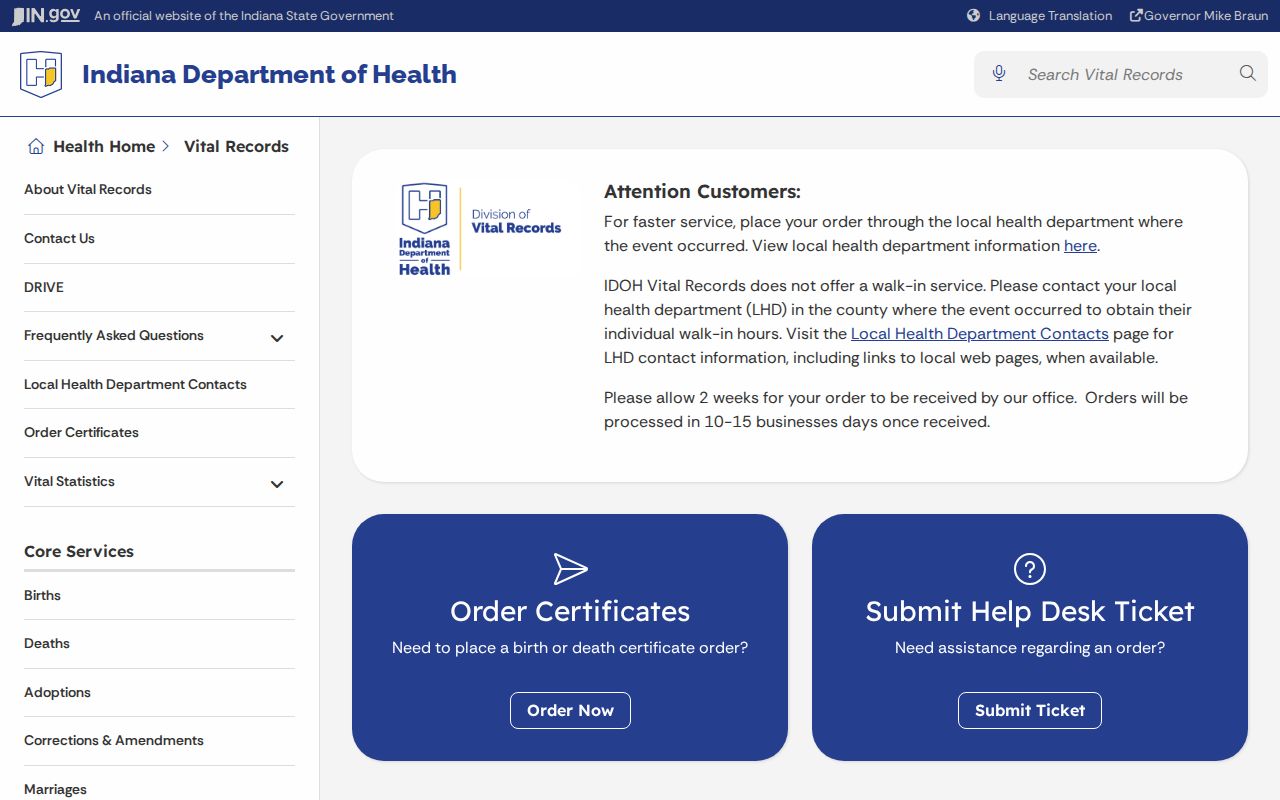
The official page distinguishes a certified record request from an open name search and directs applicants to the proper form.
Verify St. John Public Licenses
The Indiana Professional Licensing Agency provides a real-time public license verification route. Search fields include profession, first and last name, license type, number, status, city, county, state, ZIP, doing-business-as name, and selected attributes. A result can confirm that the state issued a license and show its public status. It does not prove that a license address is the person’s current home or place of practice.
The Secretary of State’s business search is a separate source for entities, registered agents, incorporators, governing people, filing numbers, status, and business addresses. Use contains, starts-with, or exact-match choices carefully. An entity address can strengthen an identity match, but it should never be turned into a claim about who occupies a St. John home.
Open Indiana’s free license verification page to reach the current search.
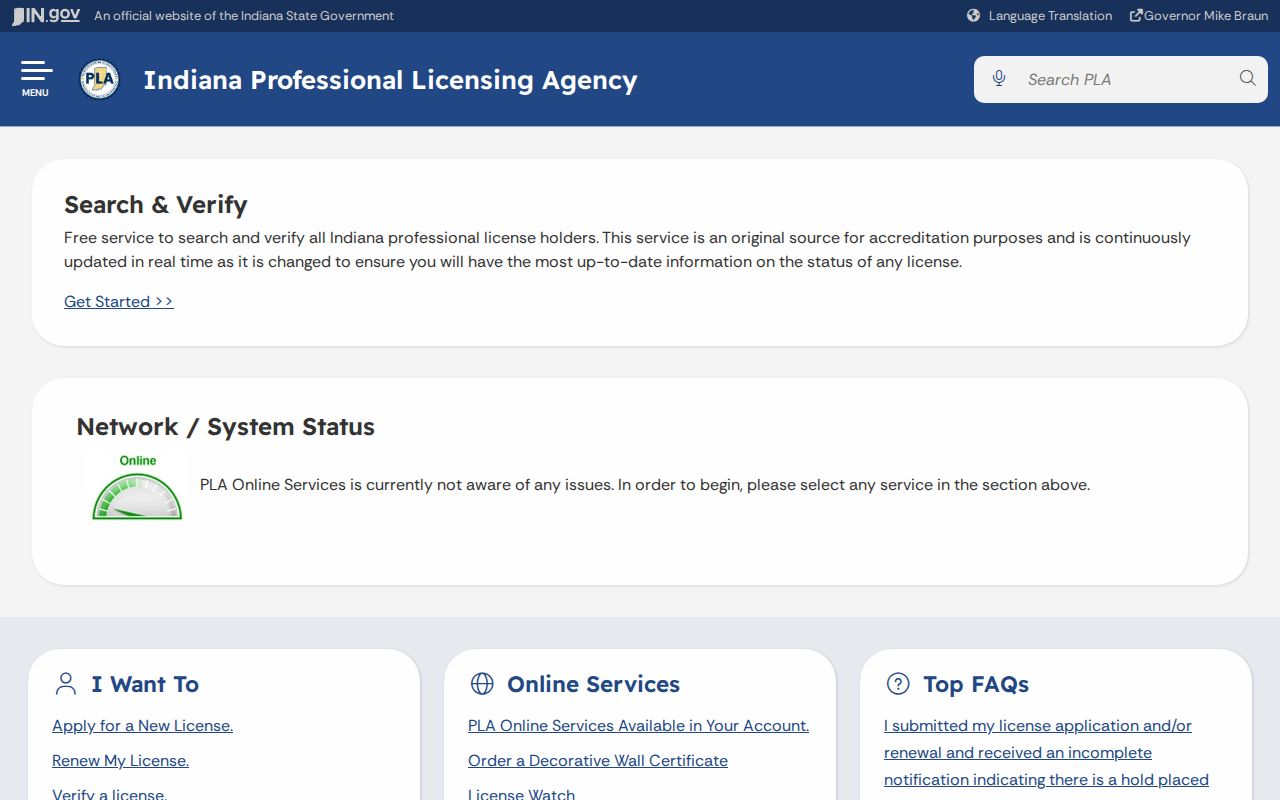
The agency screen identifies the official verification route and keeps a license check distinct from a general people search.
Check St. John Custody Sources
Indiana and federal custody records use different systems. The Indiana Department of Correction locator covers people in state custody. The federal Bureau of Prisons locator covers federal custody. Lake County Sheriff publishes jail booking and records telephone contacts, but the research did not locate a verified official searchable county jail roster. Calling the responsible agency is safer than relying on an unofficial list.
Custody status can change quickly. Match a result through the official identifier and date information shown, and do not treat an entry as proof of current conduct beyond what the agency states. The Indiana Sex and Violent Offender Registry is a separate public-safety system governed by its own limits and warnings.
Use the official Indiana correction page for the current state locator route.
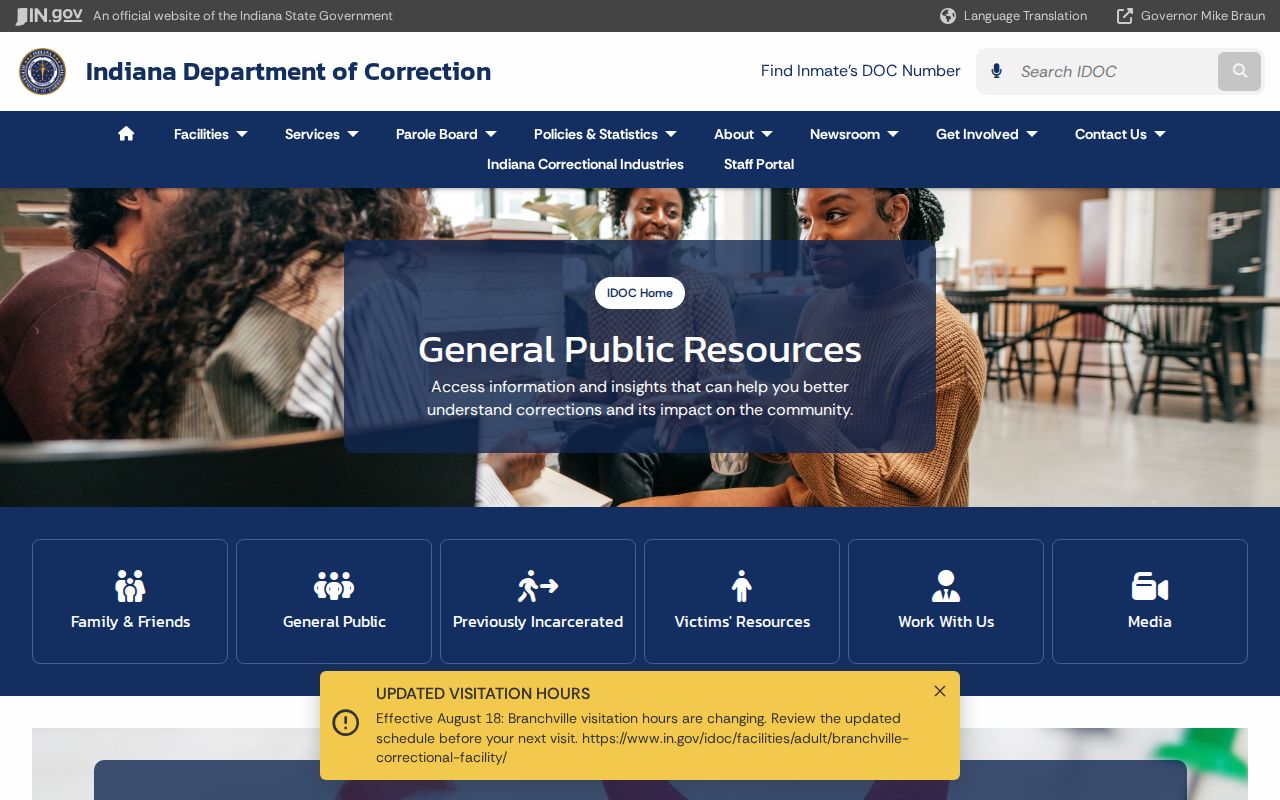
The state page keeps Indiana custody data separate from Lake County jail and federal records.
Compare St. John Directory Evidence
Official rolls explain why a name appears and identify the office responsible for corrections. Commercial people-search tools combine many sources, may charge before showing full details, and can preserve old or mismatched addresses. They can provide a lead, but the custodian’s index and certified copy carry clearer provenance.
| Source type | Strongest use | Main caution |
|---|---|---|
| Assessor or GIS | Parcel and deeded-owner link | Not proof of occupancy |
| Recorder or Clerk | Official index and copy route | Index may omit document detail |
| Library collection | Past household research | Edition reflects one point in time |
| Commercial compilation | Possible name or address lead | Source, date, and accuracy may be unclear |
- Parcel
- A mapped unit of land identified for assessment and recording.
- Index
- A finding list that points to a document; it is not always the document image.
- Criss-cross directory
- A directory arranged by street address or telephone number rather than only by surname.
- Certified copy
- A custodian-issued copy formally authenticated as a copy of its record.
Lawful personal research only. Never use an address or name record to stalk, harass, threaten, or evade a confidentiality protection.
Historical St. John Residents Directory
The Lake County Public Library genealogy collection is the main local starting point for earlier households. Its Indiana Room in Merrillville offers directories, local histories, school enumeration indexes, obituary indexes, newspapers, restricted reference works, and FamilySearch affiliate access. St. John’s branch has a genealogy and local-history scanner, but the deeper collection is not necessarily on its shelves.
St. John has no individually listed run in the State Library’s current city-directory holdings list. County-wide Polk volumes are listed for 2012, 2015, and 2020. Older Gary, Hammond, Crown Point, and region-wide directories can still help when a family, employer, telephone exchange, or postal label crossed town lines. The full collection and entry-reading method belongs in the St. John city directory.
A directory entry places a named person at a printed address in that edition. Compare several years, then use newspapers, census records, deeds, marriage indexes, and obituaries to test the connection. Spelling shifts and the labels “Saint John” and “St. John” can change search results.
Explore the Lake County library genealogy resources that support this historical resident trail.
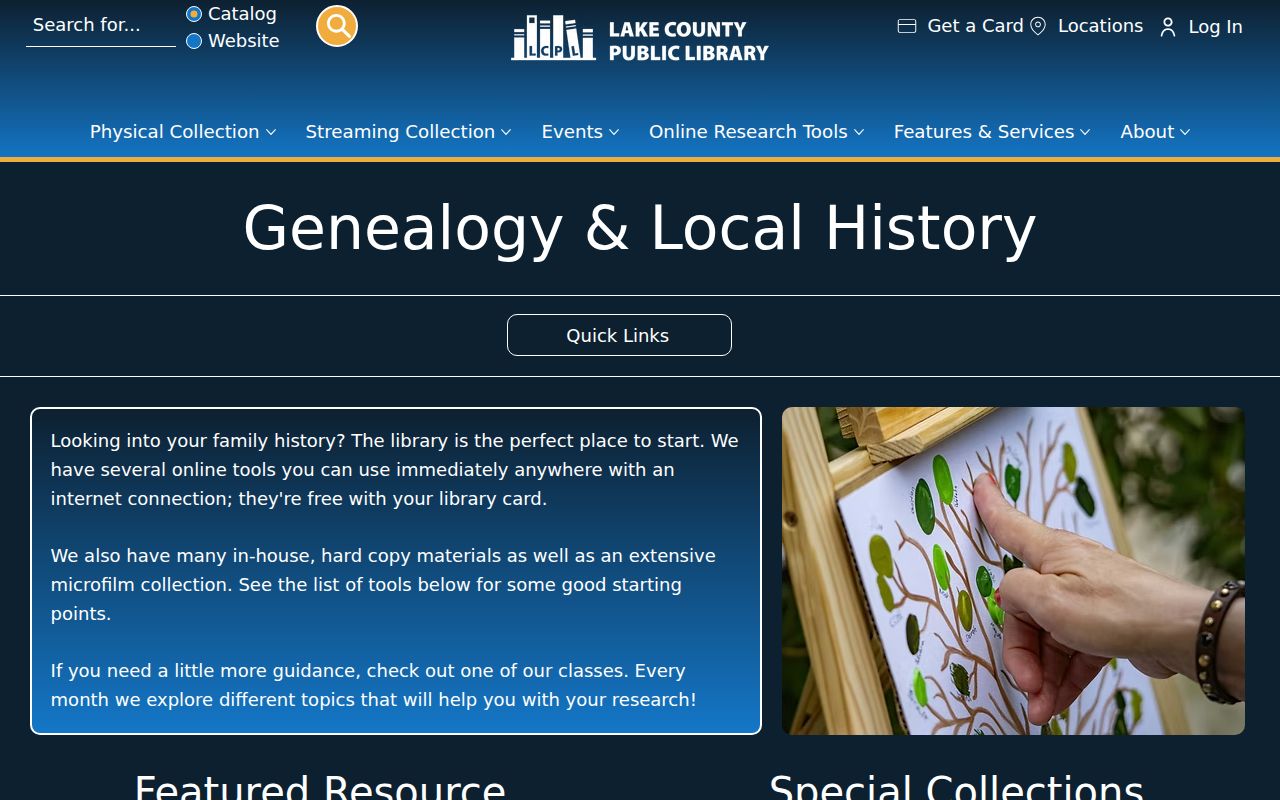
The library page points researchers toward directories and indexes that do not appear in current property or court systems.